
Weight-loss guide
Mounjaro Maintenance Dose: What Happens After You Reach Your Goal Weight?
You have reached your goal weight on Mounjaro. What happens next? A pharmacist explains maintenance doses, stopping treatment and the option many patients do not realise may be available.Bernard Beben, Pharmacist & Co-Founder · 15 July 2026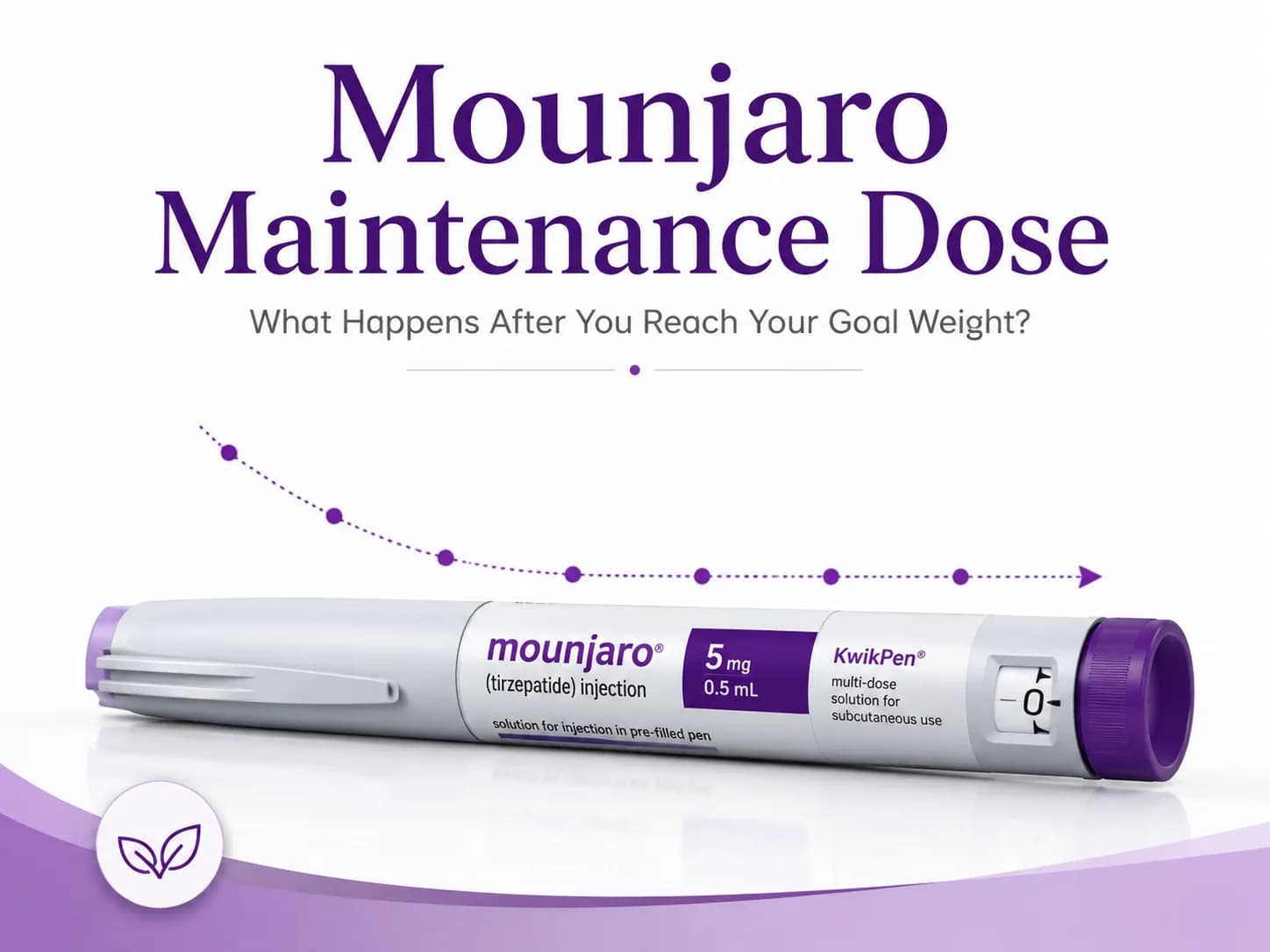
Reaching your goal weight is not necessarily the end of Mounjaro treatment. It is the point where the purpose of treatment changes from losing weight to maintaining an appropriate, stable weight without compromising nutrition, strength or quality of life.
Elixo’s approach
The important question is not simply how low the dose can go. It is which plan gives you enough support to maintain the health benefits you have achieved while remaining safe, well nourished and comfortable.
There is no predetermined maintenance dose that suits every patient. In our clinical experience, most patients we support are able to maintain their goal weight on lower individual doses between 2.5 mg and 5 mg.
What is a Mounjaro maintenance dose?
A maintenance dose is used to support longer term weight management once active dose escalation is no longer needed. It may be the same dose on which a patient lost weight or a lower dose selected after a clinical review.
The UK product information lists 5 mg, 10 mg and 15 mg once weekly as the recommended maintenance doses. The 2.5 mg strength is the treatment starting dose. The intermediate 7.5 mg and 12.5 mg strengths are normally used during dose escalation.
These licensed options do not create one predetermined maintenance dose for every patient. A dose should be judged by whether it maintains the agreed weight range, controls appetite appropriately and allows adequate nutrition with acceptable side effects.
What happens after reaching goal weight?
Your prescriber should review more than the number on the scales. A maintenance assessment should consider:
- Your current BMI, waist measurement and recent weight trend.
- Whether your weight is still falling, stable or beginning to increase.
- Appetite, cravings and the ability to eat an adequate balanced diet.
- Side effects and how the current dose affects daily life.
- Muscle strength, activity and any concern about excessive lean tissue loss.
- Changes in blood pressure, blood glucose, sleep, mobility or other health measures.
- Your previous experience of weight regain and the support available around you.
The outcome may be to continue the current dose, move to another licensed maintenance dose, consider an individual partial dose, or plan a supported reduction and stop.
Do you have to reduce the dose for maintenance?
No. Maintenance does not automatically mean using the lowest dose. Some patients maintain well on the same dose that helped them reach their goal, while others find that it continues to suppress appetite too strongly or causes further unwanted weight loss.
The right dose is the lowest clinically appropriate dose that continues to meet the agreed treatment goals. It should be reviewed over time rather than treated as a permanent setting that can never change.
Can 5 mg be used as a maintenance dose?
Yes. Five milligrams is one of the licensed recommended maintenance doses. Ten milligrams and 15 mg are also recommended maintenance options in the UK product information.
That does not mean every patient should reduce to 5 mg after reaching goal weight. A reduction may lead to increased appetite or weight regain for one person while remaining entirely adequate for another.
There is no single best Mounjaro maintenance dose. The licensed options still need to be matched to your weight trend, appetite, tolerability and health goals.
Can you stay on Mounjaro long term?
Mounjaro is indicated for weight maintenance as well as weight loss, and the NICE technology appraisal does not set a universal two year stopping limit for tirzepatide. Continued prescribing still requires regular review of benefit, risk, tolerability and whether treatment remains appropriate.
NICE advises reviewing continuation if a person has lost less than 5% of their initial weight after six months on the highest tolerated dose. Patients who have responded and reached a healthier weight need a different review focused on maintenance and prevention of regain.
What happens if you stop Mounjaro?
Appetite and food noise may increase after treatment stops, and weight regain is possible. This is not a personal failure. The biological drivers of weight can return when the medicine is withdrawn.
In the SURMOUNT 4 randomized withdrawal trial, participants first received tirzepatide for 36 weeks. During the following 52 weeks, the group switched to placebo regained an average of 14.0% of their body weight from the point treatment was withdrawn, while those continuing tirzepatide lost a further 5.5% on average.
This does not mean an individual patient will regain 14%. Some people regain less, some regain more and some may maintain their weight. The trial involved participants treated with maximum tolerated doses of 10 mg or 15 mg and does not predict what will happen after every dose or maintenance plan.
Average weight regain is not a guarantee of what will happen to you. It shows why stopping treatment is a clinical transition that needs monitoring and a plan.
Should Mounjaro be stopped gradually?
The manufacturer does not provide a standard tapering schedule. A prescriber may nevertheless choose a staged reduction so that appetite, weight and tolerability can be monitored before another change is made.
Do not create a taper by spacing injections further apart or changing the dose yourself. Irregular intervals and unplanned restarts can make treatment response and side effects harder to predict.
What other maintenance approaches may be considered?
Maintenance does not have to follow one pathway. After an individual review, the options may include:
- Continuing the current licensed maintenance dose.
- Reducing to a lower licensed maintenance dose and monitoring the response.
- Using a clinician directed partial dose when there is an individual clinical reason.
- Coming off Mounjaro with an agreed weight, appetite and nutrition monitoring plan.
- A planned period off treatment followed by clinical reassessment.
- Short periods back on treatment if weight, appetite or health markers indicate that support is needed again.
The last two approaches are sometimes described as cycling on and off Mounjaro. This is not a standard manufacturer dosing schedule and evidence for a universal cycling pattern is limited. Any pause or restart must be agreed with a prescriber, because the appropriate restart dose can depend on how long treatment was stopped, previous side effects and changes in health.
Patients must not save pens, create their own cycle or restart at a previous high dose without review.
Can partial dosing or click counting be used for maintenance?
Elixo’s approach
We may consider a clinician directed partial dose when it provides a genuine maintenance benefit, such as finding a better balance between appetite control, weight stability and tolerability.
This sits outside the routine KwikPen instructions and is therefore off label. We only consider a partial dose no lower than half the strength stated on the pen.
The prescriber must agree the exact amount and method, explain the uncertainty, confirm that the patient can follow the directions and arrange appropriate follow up. Cost alone is not a clinical reason.
Read our UK guide to Mounjaro half doses and our Mounjaro click counting guide and safety guide. The guide must only be used to check a dose already prescribed.
Can maintenance continue at a healthy BMI?
A healthy current BMI does not erase the treatment history that led to it. Maintenance decisions should consider the starting BMI, health improvements, weight trajectory and risk of regain rather than using the current BMI in isolation.
Elixo’s approach
We support patients through maintenance where continued treatment remains clinically appropriate. Our maintenance pathway usually begins when a patient reaches BMI 25 or below, and we may support suitable patients down to a minimum BMI of 21.
When a patient reaches BMI 25, they are expected to begin challenging their dose with the prescriber. This means testing whether a lower dose can maintain the agreed goal weight while preserving appropriate appetite control, nutrition, strength and wellbeing. The aim is to identify the lowest effective dose rather than continuing a higher dose automatically.
A BMI approaching 21 requires particularly careful review. Treatment should not be used to drive continuing weight loss below the agreed maintenance range. If weight continues to fall or nutrition becomes inadequate, the dose may need to be reduced, paused or stopped.
What should a maintenance plan include?
- An agreed target weight range rather than one exact number.
- A dose and review schedule supplied by the prescriber.
- Regular weight monitoring without reacting to normal daily fluctuations.
- Adequate protein, fibre, fluids and overall energy intake.
- Resistance and weight bearing activity appropriate to the patient.
- A plan for increasing appetite, side effects or weight moving outside the agreed range.
- Clear criteria for continuing, reducing, pausing or stopping treatment.
How Elixo supports Mounjaro maintenance
Elixo’s approach
Our assessment reviews your full treatment journey rather than treating goal weight as an automatic stopping point. We can consider licensed maintenance doses, a supported reduction, or a clinician directed partial dose where there is an individual clinical reason.
Visit our Mounjaro microdosing and click counting service or start your assessment for an individual review. Patients must not independently change their dose or reuse instructions issued for another pen strength.
Frequently asked questions
What is the Mounjaro maintenance dose in the UK?
There is no predetermined dose for every patient. The licensed recommended maintenance doses are 5 mg, 10 mg and 15 mg, while Elixo finds that most patients it supports can maintain on lower individual doses between 2.5 mg and 5 mg.
Do I need to stop Mounjaro when I reach goal weight?
Not automatically. Mounjaro is indicated for weight maintenance. A clinician should review whether continuing, reducing or stopping provides the best individual balance.
Will weight return after stopping Mounjaro?
Weight regain is possible and was common in a randomized withdrawal trial. Individual results vary, which is why stopping should include monitoring, nutrition and follow up.
Can click counting be used for maintenance?
Elixo may consider a clinician directed partial dose for an individual maintenance reason. It is off label, case by case and must not be calculated or changed independently.
Can maintenance continue at a healthy BMI?
Yes, where continued treatment remains clinically appropriate. Elixo usually considers maintenance from BMI 25 or below and may support suitable patients down to a minimum BMI of 21.
What happens when I reach a BMI of 25?
You will be expected to begin challenging your dose with prescriber support to identify the lowest effective amount that maintains your goal weight and wellbeing.
Can I cycle on and off Mounjaro?
A planned period off treatment followed by reassessment or a short restart may be considered individually. Cycling is not a standard manufacturer dosing schedule and must not be started, timed or restarted without prescriber instructions.
Can 2.5 mg be used for Mounjaro maintenance?
Elixo may consider it where 2.5 mg is effective and clinically appropriate. Because the product information describes 2.5 mg as the starting dose rather than a recommended maintenance dose, this is an off label maintenance approach.